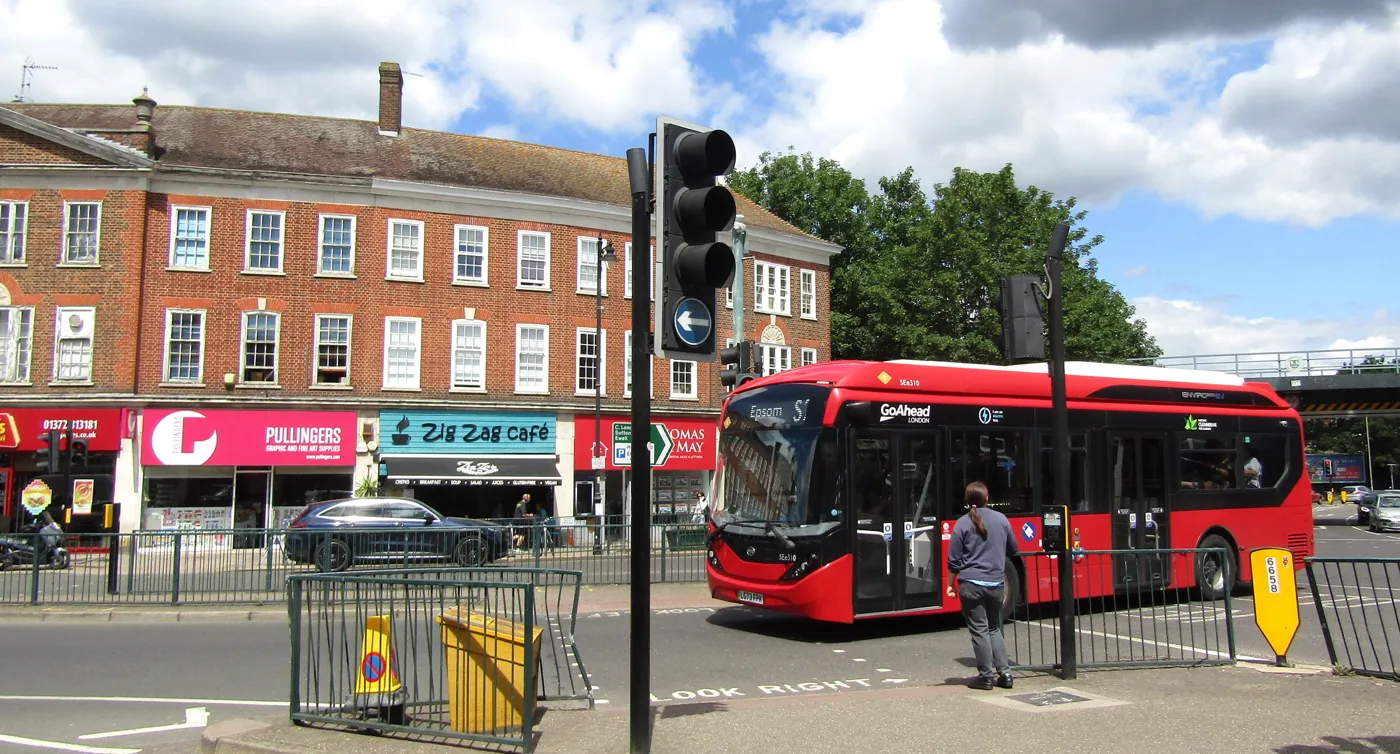

An inspector refused McDonald's bid to trade 24 hours on Epsom High Street, citing anti-social behaviour. The council won 17 of its 21 appeals since April.
McDonald’s will not be allowed to trade around the clock on Epsom High Street. A planning inspector has dismissed its appeal, agreeing with the council that opening 24 hours would draw people into the town centre after the pubs and clubs shut.
The refusal is one of 21 appeals determined since April. The council’s report records 17 of them dismissed, 81% of the total, plus a full award of costs against one appellant.
The figures are in the planning appeals report going to Epsom and Ewell’s Planning Committee on Thursday 10 September. It was written on 2 September and covers April to August 2026.
What the inspector said about McDonald’s
The restaurant at 36-40 High Street has been governed by a 1987 permission that limits trading to 6am until 1am. McDonald’s applied to vary that condition and run 24 hours a day. The council refused, on three grounds: noise, anti-social behaviour and pedestrian safety.
The inspector agreed on all three.
On noise, the decision reads that “customers would make their way to and from the premises on foot and motorised delivery scooters would arrive and leave with their drivers waiting outside at times when they do not currently do so”.
On anti-social behaviour, the inspector had objections from Surrey Police and the council’s environmental health team in front of them, and concluded:
The appeal scheme would attract customers after clubs and public houses have closed. It would result in people remaining in the area for longer than at present, increasing the risk of ASB and undermining initiatives to address this issue.
Those initiatives are real and current. The borough council signed the national ASB Help victims’ pledge in August.
On pedestrian safety, Surrey County Council as highway authority did not object. The inspector was unconvinced anyway, writing that they could not be certain the change “would not result in motorised scooters being driven onto and parked on the footway during the extended hours of operation, causing an obstruction and danger to pedestrians”.
Economic growth, employment and local spending were weighed as public benefits. The report records that the noise issues were significant enough that the harm outweighed them, and the appeal was dismissed.
The other fight is over illuminated street hubs
Eight of the 21 decisions in the report concern the same thing: large, double-sided LED advertising screens, marketed as “communications hubs”, which also offer WiFi, USB charging and phone calls. They come in pairs, because each site needs both planning permission and advertisement consent, and each is appealed separately.
The council has refused every one of them. Inspectors have not backed it every time.
| Location | Outcome |
|---|---|
| 20-38 East Street | Allowed, both appeals |
| 6A Church Street | Dismissed, both appeals |
| 34-36 Upper High Street | Dismissed, both appeals |
| Outside Tesco Express | Dismissed, both appeals |
East Street is the one that got through. The inspector found that “given the mixed nature of commercial uses in the surrounding area, other advertisements and signage, in combination with the road’s busy character arising from its proximity to the town centre, I do not find the proposal would be at odds with the local character, but would reinforce it”. They distinguished it from an earlier dismissal further along the same street on the grounds that “this Hub would be positioned away from the bus stop and associated items”.
Church Street went the other way, and on two counts. On appearance, the hub would by its “scale and location … appear as a dominant and incongruous feature and would introduce visual clutter to an otherwise restrained and uncluttered street scene”. On noise, the inspector could not be satisfied “that the hub would not cause undue disturbance to residents, particularly during the evening and overnight when background noise levels may be relatively low”, because people can make calls from it.
The company’s stated public benefit is that it removes redundant payphones elsewhere in the borough. At Church Street the inspector found the two payphones offered up were too far from the site to count for much.
Upper High Street was dismissed on scale, with the decision finding that “due to its overall size, solid appearance and prominent location adjacent to a busy road, the proposed street hub would appear dominant and discordant in the street scene”. The safety argument was rejected too: “there is no substantive evidence that this additional illumination would improve public safety in a town centre location with street lighting”.
Outside Tesco Express is the most instructive of the four. A similar screen nearby had already been allowed on appeal and built, and the inspector took that into account as existing context. The one under appeal was 600mm taller and 100mm wider. That was enough: “despite its modern design with a narrow profile, its significant height and overall scale would result in an overly prominent addition to the area”. The inspector did not accept the council’s separate case that it would harm living conditions.
A separate LED advertising screen, not a hub, was refused at the Save petrol station at 242 Ruxley Lane in West Ewell. It would have measured 6m by 3m and stood 1.5m off the ground. The inspector called it “visually discordant within the predominantly residential surroundings”, with “rotating images which would inevitably draw the eye as a feature that is not characteristic of the area”.
Two more hub appeals are live. Both relate to 64 High Street, Epsom, and both are listed in the report as pending.
A full costs award, and what triggered it
The council asked for costs once in the period and got them in full.
The case was 405 Kingston Road, where an applicant wanted to convert an office building at the rear of the site into a home. It had already been refused and dismissed at appeal in October 2025, because there was no evidence the office had been properly marketed and could not be let. A fresh application was submitted with the same gap in the evidence, and refused again.
The council argued this was the third appeal of its kind, two of them inside 12 months, with no attempt to address the reason for refusal. The inspector agreed and made a full award of costs to the council.
What else was decided
Some of the dismissals set a marker for anyone doing work in Epsom’s conservation areas or on its listed buildings.
- 60 West Hill, in the Stamford Green Conservation Area: uPVC windows and doors on the front elevation, dismissed. The inspector noted the prevailing form is timber sliding sash. Neighbours having uPVC did not help the appellant, because there was no evidence those had permission.
- 6 Chalk Lane, Grade II listed: a two-storey rear extension, dismissed. The inspector found harm to 6 Chalk Lane itself and to 2 and 4 Chalk Lane, though not to numbers 8 and 10.
- 11 Danetree Road, West Ewell: a roof conversion to a one-bedroom flat, dismissed on three grounds including parking. The inspector cited “the anticipated high level of traffic activity during school pick-up and drop-off periods”.
- 14 Edenfield Gardens, Worcester Park: replacing a 45cm front wall with a 1.65m brick pier wall and metal gates, dismissed. The report says an enforcement notice will follow if it is not removed.
Two enforcement notices were tested. One held: the notice against a motorcycle repair workshop at 185 Kingston Road in Ewell was upheld and has since been complied with. One did not. A notice over an outbuilding used as a dwelling at the rear of 11 Woodlands Road was quashed. The council had specified the wrong planning unit, and had not stated that the breach was a breach of condition, which cost it the longer 10-year enforcement window.
The council’s separate enforcement report puts live cases at 247 at the end of August, with 131 opened and 222 closed across 2026 so far.
What it means for you
If you objected to a hub at your end of town, the outcome is site-specific. These decisions did not turn on the principle. They turned on how big the screen is, what is already around it, how close it sits to a bus stop, and whether anyone lives near enough to be disturbed by people using it at night. The two pending appeals at 64 High Street will be judged the same way.
If you are replacing windows in a conservation area, get permission first. The West Hill decision is explicit that other people’s uPVC is not a defence unless you can show it was approved.
If you are thinking of appealing a refusal, address the reason for it. The 405 Kingston Road costs award is the council demonstrating it will now ask for money back when the same case comes round again unchanged.
The next big one is not in this report. The appeal against the refusal of 110 homes at Farm View, Langley Vale Road, is listed as still pending, with its inquiry opening on 15 September. The same committee decides on 48 flats at Swail House on Thursday night.
You can keep track of what is in the pipeline on our Epsom planning news page.
Frequently asked questions
Is McDonald’s in Epsom opening 24 hours?
No. The Planning Inspectorate dismissed the appeal against the council’s refusal. The restaurant at 36-40 High Street stays on the hours set by its 1987 permission, 6am to 1am.
Why was the 24-hour application refused?
On noise, anti-social behaviour and pedestrian safety. Surrey Police and the council’s environmental health team objected. The inspector concluded the change would attract customers after pubs and clubs close, keep people in the area longer and increase the risk of anti-social behaviour.
What is a communications hub?
A large double-sided LED advertising screen that also provides WiFi, USB charging and phone calls, installed on the pavement. Each one needs both planning permission and advertisement consent, which is why they generate appeals in pairs.
Are any of the Epsom street hubs going ahead?
One location. The appeals for 20-38 East Street were both allowed. The hubs at 6A Church Street, 34-36 Upper High Street and outside Tesco Express were all dismissed. Two further appeals, for 64 High Street, are still pending.
How often does Epsom and Ewell win planning appeals?
Its own report for April to August 2026 records 21 appeals determined and 17 of them dismissed, which is 81%. Over the same period the council also secured one full award of costs against an appellant.
Sources
- Epsom and Ewell Borough Council, Planning Appeals Report, Planning Committee 10 September 2026, covering April to August 2026 and dated 2 September 2026, for the 21 decisions, the 17 dismissals, the costs award, the inspectors’ quoted reasoning on every case above, and the list of appeals still pending.
- Epsom and Ewell Borough Council, Planning Committee agenda, 10 September 2026 for the enforcement performance report and its live case figures.
Have your say